
Picture this. You are a soldier from a small village in Macedonia. You have marched over three thousand miles from home. Your sandals are worn through. Your family thinks you are probably dead. And yet, when your young king asks you to cross one more river, into one more unknown land, you say yes. Not because you have to. Because you want to.
That is the strange, almost unbelievable power of Alexander the Great charisma. It is the reason a twenty year old prince from a small kingdom on the edge of Greece convinced tens of thousands of grown men to abandon their homes, their comfort, and their common sense, and follow him past the borders of the known world. This is not just a story about war. It is a story about why people follow other people, even into the impossible.
Cleopatra’s Strategic Mind: The Real Story Behind History’s Most Famous Romance
Before we go further, here is a quick snapshot of what made this ancient leader so magnetic, so that you can see the full picture at a glance.
If you want to learn more about Julius Caesar turned Rome stage check out our detailed guide for practical tips and expert advice.
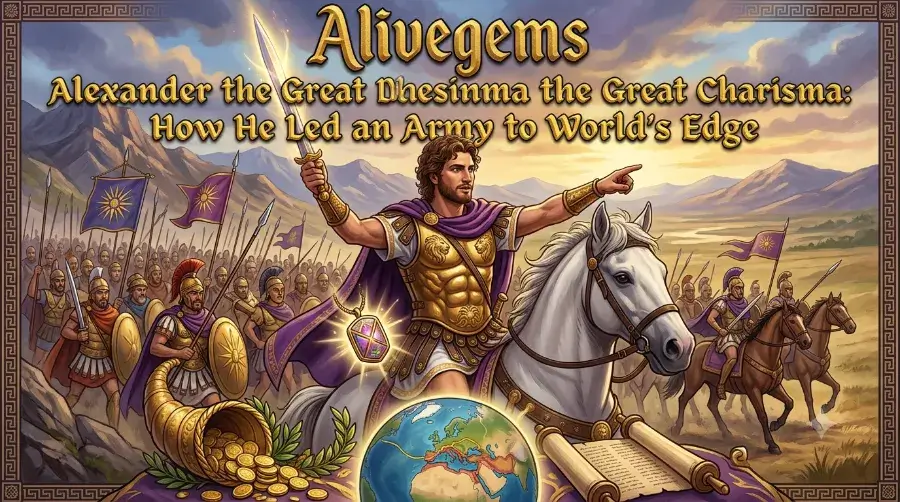
Key Takeaways at a Glance
| Charisma Trait | What Alexander Did | Result |
|---|---|---|
| Led from the front | Fought in the first cavalry charge in nearly every battle | Soldiers trusted he would never ask what he wouldn’t do himself |
| Shared their hardships | Walked through the Gedrosian Desert instead of riding in comfort | Troops saw him as one of them, not above them |
| Personal connection | Reportedly knew thousands of his soldiers by name | Created loyalty that felt personal, not military |
| Bold vision | Promised to conquer the known world and spread Greek culture | Gave ordinary men a reason bigger than pay or plunder |
| Generosity | Gave away his own share of loot and land to his men | Built trust that he was fighting for them, not just himself |
| Physical courage | Suffered severe wounds, including a near fatal chest injury at Multan in 326 BC | Earned respect that no title alone could buy |
Now let us dig into the real story behind these numbers, because the details are what make this so fascinating.
Who Was Alexander the Great, Really
Alexander III of Macedon was born in 356 BC and became king at just twenty years old after his father, Philip II, was assassinated. Within about a decade, he built one of the largest empires the ancient world had ever seen, stretching from Greece all the way to northwestern India. His leadership and military strategies are still analyzed in military academies and leadership studies across the world today. World History Edu
But numbers on a map do not explain why his men followed him. Armies do not march thousands of miles simply because a king tells them to. There has to be something else pulling them forward. That something else was Alexander leadership personality, a rare mix of charm, courage, and stubborn belief in his own destiny.
If you want the bigger picture of how legendary rulers throughout history used personal magnetism to build empires, our guide on ancient world legends and charismatic leaders breaks down several of these figures side by side, and Alexander sits right at the top of that list.
A Childhood Built for Greatness
Alexander was not simply handed charisma. It was shaped early. His teacher was Aristotle, one of the greatest minds in history, who personally tutored the young prince in philosophy, medicine, and rhetoric. Alexander was taken with the character Achilles in Homer’s epic tale, The Iliad, during his growing up years, and he decided to model himself after Achilles. BUSINESS & LEADERSHIP
That detail matters more than it seems. Alexander did not just want to win wars. He wanted to become a legend, the way Achilles was a legend. This hunger for glory, mixed with a classical education most kings never received, gave him both the polish and the fire that made people want to follow him.
To get a better understanding of Ramesses II: The Pharaoh Who Lost a Battle our guide breaks down exactly what to expect.
Even before he took the throne, he was proving himself. At age sixteen, while his father Philip II was away campaigning, Alexander ruled Macedonia as regent and successfully crushed a rebellion by the Maedi tribe. Two years later, at the Battle of Chaeronea in 338 BC, Alexander commanded the Macedonian cavalry and played a pivotal role in defeating the Greek coalition. By the time he became king, he had already tasted victory, and his soldiers had already seen him lead. World History EduWorld History Edu
What Made Alexander the Great Charisma So Different
There have been thousands of kings, generals, and emperors throughout history. Very few of them are remembered as the most charismatic ancient military leader. So what set Alexander apart from the rest?
The answer comes down to a handful of habits that, honestly, most leaders even today struggle to copy.
To get a better understanding of Cyrus the Great Invented Human Rights our guide breaks down exactly what to expect.
He Led From the Front, Every Single Time
This is perhaps the single biggest reason Alexander inspired absolute loyalty. He did not sit behind his army barking orders from a safe hill. He led from the front and often risked his own life alongside his soldiers, which earned him their unwavering loyalty. TheLeadershipMission
At the Battle of the Granicus River in 334 BC, Alexander charged directly into enemy cavalry and nearly lost his life when a Persian noble’s blade came within inches of his skull. At the Battle of Issus in 333 BC, he personally led the charge that broke the Persian line and sent King Darius III fleeing. He did this again and again, battle after battle, for over a decade.
If you want to learn more about Ashoka Great brutal warrior enlightened check out our detailed guide for practical tips and expert advice.
Soldiers notice this kind of thing. When your commander bleeds in the same mud you do, something changes in how you see him. As one detailed profile puts it, Alexander’s charismatic leadership was legendary among the ambitious warlords who came after him, and several tried to copy his style of leading from the front with mixed success. In fact, King Pyrrhus of Epirus, famous for his costly wars against Rome, came closest to matching him, regularly putting himself in danger and suffering several wounds just like Alexander had. History HitHistory Hit
If you want to learn more about Leonidas 300 Spartans changed history check out our detailed guide for practical tips and expert advice.
He Shared Their Suffering, Not Just Their Glory
There is a story historians love to tell. In 325 BC, while crossing the brutal Gedrosian Desert in modern day Iran and Pakistan, Alexander’s army was dying of thirst. A group of soldiers found a small amount of water and brought it to him in a helmet. According to ancient sources, Alexander looked at his exhausted men, then poured the water onto the sand in front of everyone, refusing to drink while his soldiers went without.
Sun Tzu: The Mysterious General Whose Words Still Win Modern Wars
Whether every detail of that story is exact, the message it carried was real. Alexander was famous for sharing hardship rather than avoiding it. This single choice did more for his men’s loyalty than a hundred speeches ever could.
To get a better understanding of Hannibal Barca outsmarted Rome generals our guide breaks down exactly what to expect
He Made Ordinary Soldiers Feel Like Somebody
Ancient sources describe Alexander as someone who remembered names, faces, and small personal details about his men. In an army of tens of thousands, this was extraordinary. Imagine being a farmer’s son from a tiny village, and your king, a man descended from gods according to legend, remembers your name and asks about your family.
That is not just good manners. That is strategy dressed up as kindness, and it worked because it felt genuine. People do not follow titles to the edge of the world. They follow people who make them feel seen.
He Gave Away What Others Would Have Kept
After major victories, Alexander regularly gave his own share of treasure, land, and titles to his officers and soldiers rather than hoarding it for himself. When someone asked what he had kept for himself after giving away so much, he reportedly answered that he had kept hope.
This generosity built a strange kind of debt between Alexander and his men. Not a financial debt, but an emotional one. They felt they owed him something back, and what they gave him in return was loyalty that outlasted logic.
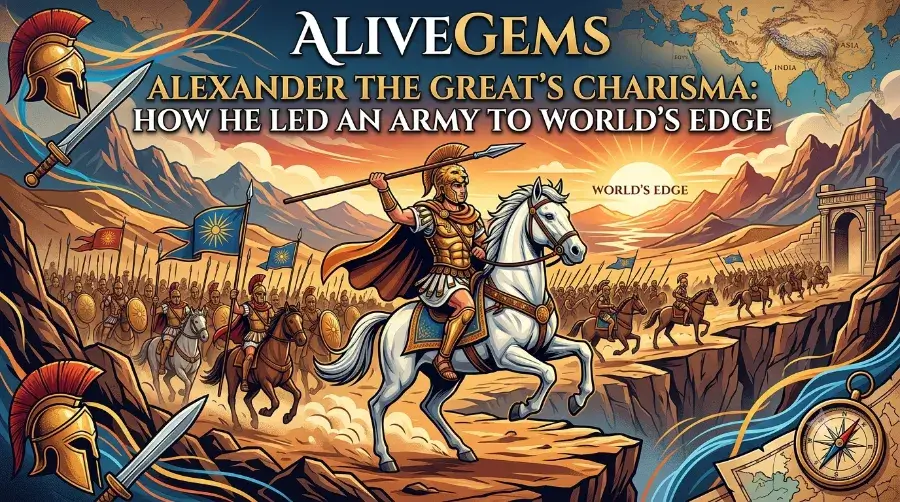
The Numbers Behind the Legend
Sometimes the scale of what Alexander achieved is easier to understand through simple facts. Here is a quick breakdown of his campaign in figures.
| Milestone | Detail |
|---|---|
| Became king | 336 BC, at age 20 |
| Died | 323 BC, in Babylon, at age 32 or 33 |
| Length of reign | About 13 years |
| Distance traveled | Roughly 11,000 miles across his campaigns |
| Empire size at death | Stretched from Greece to northwestern India |
| Battles lost | Zero, according to nearly all surviving historical records |
| Cities founded | More than 20, many named Alexandria |
These numbers alone are impressive. But numbers do not march. Men do. And men only march that far for a leader who has earned something deeper than obedience.
Real Moments That Prove Alexander Inspired Absolute Loyalty
Some stories from Alexander’s life show his charisma in action far better than any list of traits ever could.
- The Gordian Knot, 333 BC. Legend said whoever untied an impossibly tangled knot in the city of Gordium would rule all of Asia. Instead of struggling with it, Alexander drew his sword and simply cut it in half. It was theater, but it worked. His men saw a leader who solved impossible problems his own way, and the story spread through the ranks like wildfire.
- The wound at Multan, 326 BC. During a siege in what is now Pakistan, Alexander scaled an enemy wall almost alone and was struck by an arrow that pierced his lung. His men, terrified he might die, tore the city apart in a fury of grief and rage to reach him. He survived, barely, and the loyalty this incident cemented was almost frightening in its intensity.
- The mutiny at the Hyphasis River, 326 BC. After years of marching, his exhausted army finally refused to go further into India. Instead of punishing them, Alexander listened, grieved publicly, and eventually agreed to turn back. This moment shows something important. Even the most charismatic ancient military leader in history knew when to bend, and that flexibility kept his army from breaking apart completely.
- The mass wedding at Susa, 324 BC. Alexander organized a huge ceremony where he and dozens of his officers married Persian noblewomen, blending Greek and Persian culture together. It was controversial among his own men, but it showed his vision was never just about conquest. It was about building something new, and he wanted his men to feel like part of that bigger story.
If you enjoy stories like these, alivegems.com has covered plenty of other unforgettable historical figures who used personality as their greatest weapon, and you can explore more of them on our homepage whenever you are ready for your next deep dive.
Alexander Leadership Personality Compared to Other Ancient Rulers
It helps to compare Alexander to other famous leaders of the ancient world, because it shows just how rare his particular blend of traits really was.
| Leader | Led From the Front | Known for Personal Charm | Empire Outlived Them |
|---|---|---|---|
| Alexander the Great | Yes, constantly | Yes, extremely | No, collapsed shortly after death |
| Julius Caesar | Often | Yes | Partially, through Rome |
| Darius III of Persia | Rarely | Limited | No |
| Genghis Khan | Sometimes | Yes, through fear and reward | Yes, for generations |
| Julius Caesar’s rival Pompey | Rarely | Moderate | No |
This table makes one thing clear. Charisma alone did not guarantee a lasting empire. In fact, after Alexander passed away, no one had the charisma or leadership skill to rule such a vast empire, and civil war soon broke out, undoing in one generation what he had built. His personality was the glue that held everything together while he lived, but it was also something almost impossible to pass down to anyone else. BUSINESS & LEADERSHIP
The Dark Side Nobody Talks About Enough
It would not be honest to paint Alexander as purely inspiring. His charisma had a darker edge too. As his campaigns dragged on, he grew increasingly paranoid, executed close friends he suspected of disloyalty, and adopted Persian customs that alienated some of his oldest Macedonian companions.
His childhood friend Cleitus was killed by Alexander himself during a drunken argument in 328 BC. This single act shows that even the most magnetic leaders are still human, flawed, and capable of destroying the very loyalty they worked so hard to build. History remembers his charisma, but it should also remember its cost.
Why This Still Matters Today
You might be thinking, this happened over two thousand years ago, so why should it matter now. Here is why. The same qualities that made Alexander’s soldiers march into unknown deserts still explain why people follow leaders, coaches, founders, and mentors today.
- People do not follow comfort, they follow conviction.
- People remember how a leader treated them personally, more than what that leader achieved.
- People will endure real hardship for a shared story bigger than themselves.
If you want a modern breakdown of how these ancient leadership lessons apply to personal goals and everyday life, this piece on applying Alexander’s mindset to modern goals offers a fun, practical angle worth reading. There is also a great historical deep dive from History Hit on Alexander’s leadership art that pairs nicely with everything covered here. And if you enjoy the cultural side of ancient warrior identity, Warrior Poet Supply Co’s take on Alexander is worth a look too.
For further reading beyond these, Britannica’s overview of Alexander offers a strong academic foundation, while the World History Encyclopedia has detailed timelines of each major campaign, and Smithsonian Magazine has published excellent long form pieces on the archaeology behind his conquests.
Quick Quiz: Test Your Alexander Knowledge
Try these five questions and see how much you actually remember.
- At what age did Alexander become king of Macedonia?
a) 16
b) 20
c) 25 - Which philosopher personally tutored young Alexander?
a) Socrates
b) Plato
c) Aristotle - Where did Alexander’s army finally refuse to march further?
a) The Hyphasis River
b) The Nile River
c) The Danube River - What famous puzzle did Alexander solve by cutting it with his sword?
a) The Sphinx’s riddle
b) The Gordian Knot
c) The Labyrinth of Crete - In what year did Alexander die?
a) 320 BC
b) 323 BC
c) 330 BC
Answers: 1-b, 2-c, 3-a, 4-b, 5-b
Frequently Asked Questions
What made Alexander the Great such a charismatic leader?
Alexander led every major battle from the front, shared hardships equally with his men, remembered soldiers personally, and gave away wealth generously, which together built deep emotional loyalty rather than simple obedience.
Did Alexander the Great ever lose a battle?
According to nearly all surviving historical records, Alexander never lost a major battle throughout his entire military career, an extremely rare achievement for any commander in history.
Why did Alexander’s army eventually refuse to keep marching?
After years of continuous campaigning far from home, exhaustion and homesickness reached a breaking point at the Hyphasis River in 326 BC, forcing Alexander to finally agree to turn back toward Persia.
How far did Alexander the Great’s empire actually stretch?
At its largest, his empire reached from Greece and Egypt in the west all the way to the Indus River region in modern Pakistan, covering roughly two million square miles.
Is Alexander the Great considered the most charismatic ancient military leader?
Many historians and leadership scholars consider him among the most charismatic ancient military leader in recorded history, largely because of how deeply and personally his soldiers remained loyal despite extreme hardship.
Conclusion
Alexander the Great did not conquer the known world through numbers alone. His army was often outnumbered, exhausted, and far from home. What carried them forward was something harder to measure and far more powerful, a leader who bled with them, celebrated with them, and made each soldier feel like his story actually mattered.
That is the real lesson hidden inside Alexander the Great charisma. Titles, armies, and empires fade. But the feeling of being truly seen by someone you believe in, that feeling can carry ordinary people to the edge of the world and back. For more stories about the personalities who shaped history far more than any crown ever could, alivegems.com will keep bringing these figures to life, one unforgettable chapter at a time.
References
- World History Edu, Foundations and Characteristics of Alexander the Great’s Leadership
- History Hit, How Alexander the Great Epitomised the Art of Charismatic Leadership
- History Tools, Alexander the Great: Epitome of the Charismatic Leader
- The Leadership Mission, Alexander the Great: Leadership Style
- Business and Leadership, Alexander the Great: World’s Greatest Conqueror Profile
- Leadership Ministries, Leadership Lessons from Alexander the Great
- Plutarch, Life of Alexander (classical primary source)