
Vasily Arkhipov prevented nuclear war. Vasily Arkhipov was born on January 30, 1926, in a small Russian village. He joined the Soviet Navy young and rose steadily through the ranks. By the early 1960s, he had already survived one nightmare that most sailors never even hear about.
In July 1961, Arkhipov served on the submarine K-19 when its nuclear reactor began to fail. The crew built a makeshift cooling system to stop a full meltdown. Because of that, seven engineers and their commanding officer died within a month from radiation sickness, and fifteen more crew members died over the following two years. Arkhipov himself was exposed to dangerous radiation levels. That submarine later earned the grim nickname “Hiroshima.”
So when Arkhipov later argued against firing a nuclear weapon in 1962, he was not speaking from theory. He had already watched what radiation does to a human body up close. That experience, historians believe, shaped the composure he showed just one year later.
If you want to learn more about Hypatia Alexandria forgotten genius check out our detailed guide for practical tips and expert advice. If you want to learn more about Sybil Ludington teenage American hero check out our detailed guide for practical tips and expert advice.
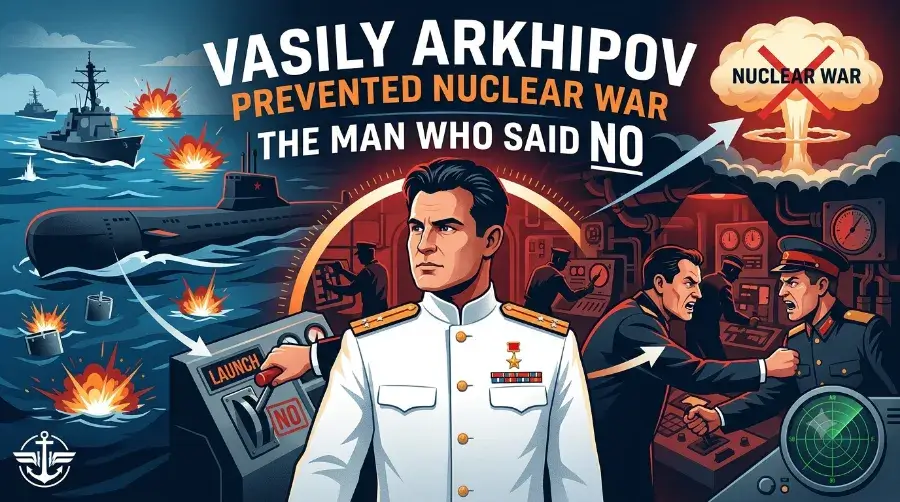
The Night the World Nearly Ended: Vasily Arkhipov Prevented Nuclear War
By October 1962, tensions between the United States and the Soviet Union had reached a boiling point. The Soviets had secretly placed nuclear missiles in Cuba. President Kennedy ordered a naval blockade. For thirteen days, the entire planet held its breath.
What almost nobody knew at the time was that four Soviet submarines, including B-59, had sailed toward Cuba carrying something far more dangerous than anyone in Washington expected: a nuclear torpedo on each vessel.
On October 27, eleven United States Navy destroyers and the aircraft carrier USS Randolph tracked down B-59 near Cuba. According to the National Security Archive, the Americans dropped small practice depth charges meant only to force the submarine to surface for identification. Inside the sub, however, those explosions sounded like the start of a real war. To get a better understanding of Ching Shih most powerful pirate our guide breaks down exactly what to expect.
Here is what the crew of B-59 was dealing with at that exact moment:
- No contact with Moscow for several days
- Battery power almost completely drained
- Air conditioning shut off to save energy
- Temperatures inside reportedly climbing past 45 degrees Celsius
- No idea whether war had already started above the surface
Captain Valentin Savitsky, exhausted and furious, believed the attack was real. He reportedly shouted something close to, “We’re going to blast them now, we will die, but we will sink them all.” He gave the order to arm the nuclear torpedo.
To get a better understanding of Eratosthenes calculated Earth circumference our guide breaks down exactly what to expect.
Why One Man’s Vote Mattered More Than Anyone Realized
On most Soviet submarines, only two signatures were needed to launch a nuclear weapon: the captain and the political officer. Both men aboard B-59 agreed with Savitsky. War, by that standard rule, should have started right there in the Caribbean.
But B-59 was different. Because Arkhipov also held the rank of chief of staff for the entire submarine flotilla, a third signature was required on his boat specifically. That single administrative detail changed the fate of the world.
Arkhipov refused to give his consent. He argued that the explosions were signals, not an actual attack, and convinced Savitsky to surface the submarine instead of firing. As detailed in The Guardian’s account of the incident, this quiet act of resistance may have prevented a full scale nuclear war between two superpowers.
B-59 surfaced in the middle of the American fleet, raised the Soviet flag, and waited for instructions. No shots were fired. No torpedo was launched. The submarine eventually turned back toward Russia, and the crisis ended peacefully days later when Kennedy and Khrushchev reached an agreement. To get a better understanding of Rosalind Franklin DNA credit stolen our guide breaks down exactly what to expect.
Why This Man Who Stopped Nuclear War Was Forgotten for So Long
You would think a story this dramatic would be taught in every school. Instead, it stayed buried for decades. The Soviet government kept the details of Operation Anadyr classified for years, and returning submarine crews were treated with embarrassment rather than honor for having surfaced instead of fighting. To get a better understanding of Ibn Battuta forgotten greatest explorer our guide breaks down exactly what to expect.
The full story only became public in 2002, forty years after the crisis, at a conference in Havana attended by former US Defense Secretary Robert McNamara. According to research published by Arms Control Association, McNamara admitted that the world had come far closer to nuclear war than anyone in Washington understood at the time.
At that same conference, Thomas Blanton, director of the National Security Archive, said plainly that Arkhipov had “saved the world.” Yet even after that statement, his name never entered mainstream history books the way names like Kennedy or Khrushchev did.
Arkhipov continued serving in the Soviet Navy after 1962. He was promoted to rear admiral in 1975 and later became a vice admiral in 1981, eventually heading the Kirov Naval Academy. He died on August 19, 1998, from kidney cancer, which many believe was connected to his radiation exposure on K-19 back in 1961.
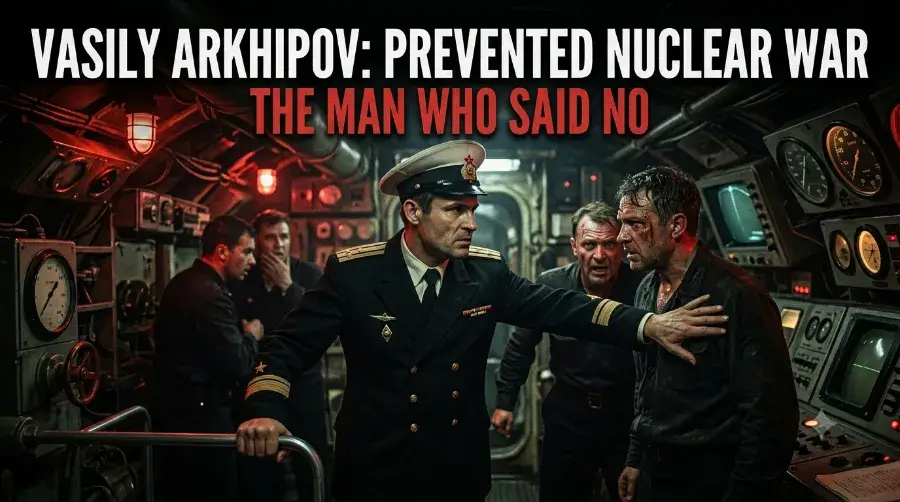
How the World Finally Honored a Forgotten Cold War Hero
Recognition came slowly, but it did come. In 2017, on the 55th anniversary of the B-59 incident, the Future of Life Institute tracked down Arkhipov’s surviving family members in Russia. His daughter Elena and grandson Sergei traveled to London to accept the first ever Future of Life Award on his behalf.
Beatrice Fihn, then Executive Director of the International Campaign to Abolish Nuclear Weapons and a 2017 Nobel Peace Prize winner, said Arkhipov’s story shows exactly how close humanity has come to catastrophe in the past. As explained by Human Progress, his decision that night stands as one of the most consequential individual acts in modern history, precisely because almost nobody knows it happened. To get a better understanding of Ada Lovelace invented computer programming our guide breaks down exactly what to expect.
A Quick Timeline of Vasily Arkhipov’s Story
- 1926 – Born in Staraya Kupavna, Russia
- 1961 – Survives the K-19 nuclear reactor disaster
- October 27, 1962 – Refuses to authorize nuclear torpedo launch aboard B-59
- 1975 – Promoted to rear admiral
- 1981 – Promoted to vice admiral, retires shortly after
- 1998 – Dies from cancer linked to earlier radiation exposure
- 2002 – His role in the crisis becomes public knowledge
- 2017 – Receives the first Future of Life Award, posthumously
What This Forgotten Hero Teaches Us Today
There is something quietly powerful about a hero who never wanted attention and never got much of it either. Arkhipov did not storm out of that submarine looking for medals. He simply refused to let panic make an irreversible decision. That kind of calm, stubborn courage rarely makes headlines, but it changes everything.
In a world that still holds thousands of nuclear weapons, his story feels less like ancient history and more like a warning label. One person, in one impossible moment, kept disaster from happening. If you enjoy stories about individuals whose quiet choices shaped history far more than any king or general, you will find more of them over on our page dedicated to forgotten charismatic figures, where history’s overlooked names finally get their due credit. If you want to learn more about James Barry secret Victorian doctor check out our detailed guide for practical tips and expert advice.
Frequently Asked Questions
Did Vasily Arkhipov actually stop nuclear war by himself?
He was one of three officers required to approve the launch, and he was the only one who refused. His refusal was decisive because unanimous agreement was required on B-59 specifically.
Why did the Americans not know about the nuclear torpedoes?
The United States believed the Soviet submarines carried only conventional weapons. The presence of nuclear torpedoes on board was not confirmed publicly until decades later.
Did Arkhipov receive any recognition during his lifetime?
No. He died in 1998 largely unrecognized. Public awareness only grew after 2002, and formal international recognition did not come until 2017.
How powerful was the nuclear torpedo on B-59?
Reports describe it as roughly 10 to 15 kilotons, similar in destructive power to the bomb dropped on Hiroshima in 1945.
Is Vasily Arkhipov’s story confirmed by historians?
Yes, though some details rely on witness testimony from surviving crew members, since Soviet records on the incident remained classified for many years. The core facts, including the requirement for unanimous approval and Arkhipov’s refusal, are widely accepted by historians.
Conclusion
History rarely hands us a single, clean moment where one ordinary decision saves millions of lives. Vasily Arkhipov gave us exactly that. He was not a president, not a general, not a household name. He was a tired man in a hot metal tube under the ocean who chose patience over panic. That choice is the entire reason so many of us are alive to read his story today. The next time someone tells you that one person cannot change the course of history, remember his name.
References
- The Guardian, “Thank you Vasili Arkhipov, the man who stopped nuclear war,” 2012 Vasily Arkhipov prevented nuclear war
- Arms Control Association, “Apocalypse Averted: Lessons from the Man Who Saved the World,” 2014Vasily Arkhipov prevented nuclear war
- Human Progress, “Heroes of Progress Pt. 42: Vasili Arkhipov”Vasily Arkhipov prevented nuclear war
- National Security Archive, George Washington University, “The Underwater Cuban Missile Crisis at 60,” 2022Vasily Arkhipov prevented nuclear war
- Wikipedia, “Vasily Arkhipov” and “Soviet submarine B-59” Vasily Arkhipov prevented nuclear war
- Future of Life Institute, Future of Life Award records, 2017 Vasily Arkhipov prevented nuclear war